How Does an Automatic Fire Extinguishing Glue Work: The Adhesive That Fights Fire
How Does an Automatic Fire Extinguishing Glue Work: The Adhesive That Fights Fire
In the intricate world of fire safety, we are familiar with sprinklers that spray water, alarms that blare, and extinguishers that discharge foam or powder. But what if a critical component of a building’s structure or a piece of machinery could itself become a fire suppression device? What if the very glue holding something together could automatically activate to fight a fire? This is not a concept from science fiction; it is the reality of advanced intumescent and ablative adhesives, which can be poetically and accurately described as “automatic fire extinguishing glue.”
Unlike a handheld extinguisher that requires human intervention, this technology is passive, automatic, and integrated directly into the materials it protects. It represents a paradigm shift from applying fire protection to being fire protection. This article will demystify how these remarkable materials work, exploring the chemistry behind their activation, their key applications, and why they represent a critical frontier in modern safety engineering.
Defining the “Fire Extinguishing Glue”
First, it’s essential to clarify the terminology. “Automatic fire extinguishing glue” is not a single, off-the-shelf product like a tube of superglue. It is a functional category for high-performance adhesives, sealants, and coatings engineered with fire-resistant properties. Their “automatic” nature comes from their reactive chemistry: they respond to extreme heat without any external power source, signal, or command. Their “fire extinguishing” capability is not about putting out a fire across a room, but about localized containment and protection.
These materials primarily work through one of two key mechanisms: intumescence or ablation. Some advanced formulations combine both.
The Primary Mechanism: Intumescence – The Art of Controlled Expansion
The most common and visually dramatic principle at work is intumescence. The word itself comes from the Latin intumescere, meaning “to swell up.” An intumescent adhesive is a complex chemical mixture that, when exposed to heat, undergoes a transformative reaction, expanding to many times its original volume to form a stable, insulating char.
This process is a carefully orchestrated chemical ballet, typically involving three core components working in synergy:
- The Acid Source: Often ammonium polyphosphate (APP). At a specific trigger temperature (typically between 150°C and 250°C), it decomposes to yield a mineral acid, such as phosphoric acid.
- The Carbonific: This is the carbon-rich source, such as pentaerythritol (PER) or starch. The acid produced by the acid source catalyzes the dehydration of the carbonific, converting it from a carbohydrate into carbon char.
- The Blowing Agent: A compound like melamine or urea that, upon decomposition, releases large volumes of non-flammable gases (like ammonia, water vapor, and carbon dioxide).
The Step-by-Step “Automatic” Process:
- Step 1: Heat Exposure. A fire develops, and the temperature at the adhesive’s location begins to rise rapidly.
- Step 2: Chemical Activation. Upon reaching its specific activation temperature, the acid source within the adhesive breaks down, releasing the catalytic acid.
- Step 3: Char Formation. This acid immediately reacts with the carbonific, causing it to char and form a rigid, carbonaceous skeleton.
- Step 4: Gas Expansion. Simultaneously, the blowing agent decomposes, releasing a torrent of gas bubbles. These gases inflate the softening, viscous char, much like baking soda inflates a cake batter.
- Step 5: Insulating Foam Formation. The result is a solid, multicellular, carbon-based foam (the char) that is incredibly lightweight and has low thermal conductivity. This expanded char layer can be 10 to 100 times thicker than the original adhesive layer.
How This “Extinguishes” the Fire Locally:
The swollen char acts as a protective barrier in three critical ways:
- Thermal Insulation: The foam is an excellent insulator, drastically reducing the heat transfer to the substrate (e.g., a steel beam or a protected material). This keeps the substrate’s temperature low, preserving its structural integrity. For steel, this prevents it from softening and collapsing.
- Mass Transport Barrier: The dense, labyrinthine structure of the char prevents the influx of fresh oxygen to the fuel source and blocks the outward flow of flammable pyrolysis gases produced by the heated substrate. It starves the fire at its interface.
- Radiant Heat Block: The char layer reflects and absorbs radiant heat, further protecting the underlying material.
In essence, the glue sacrifices itself, transforming into a protective shield that actively fights the fire’s progress at the point of contact.
The Secondary Mechanism: Ablation – The Art of Controlled Sacrifice
While intumescence is about expansion, ablation is about controlled consumption. Ablative adhesives and sealants are designed to absorb extreme heat through endothermic (heat-absorbing) chemical reactions and by slowly and predictably decomposing.
How Ablation Works:
- Heat Absorption: The material is formulated with compounds that contain chemically bound water, such as aluminum trihydroxide (ATH) or magnesium hydroxide (MDH). When heated, these compounds decompose in an endothermic reaction. For example, ATH breaks down into aluminum oxide and water vapor: 2 Al(OH)₃ + heat → Al₂O₃ + 3 H₂O. This reaction absorbs a massive amount of energy, actively cooling the adhesive and the adjacent substrate.
- Char Formation and Erosion: The binder (e.g., an epoxy or silicone) forms a stable, insulating char as it decomposes. However, unlike the expanding intumescent char, this char is designed to erode away slowly. This continual erosion (ablation) carries heat away from the surface, further protecting the underlying material for a defined period.
Ablative materials are like a heat shield on a spacecraft. They don’t expand; they slowly burn away, sacrificing their own mass to protect what’s behind them. They are particularly useful in applications involving very high heat fluxes or direct flame impingement for a specified duration.
Key Applications: Where is this “Magic Glue” Used?
This technology is not a laboratory curiosity; it is deployed in critical, high-stakes environments.
- Firestop Sealants for Penetrations: One of the most common applications. Where pipes, cables, or conduits pass through fire-rated walls and floors, they create a weakness. Intumescent sealant is applied as a glue or caulk around these openings. In a fire, it expands automatically, sealing the opening completely and restoring the wall’s fire-resistance rating by preventing the passage of flames and toxic gases.
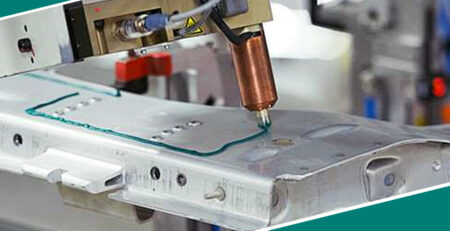
- Structural Steel Bonding and Protection: In modern construction, elements are often bonded rather than welded or bolted. Intumescent epoxy adhesives are used to bond steel to steel or composite panels. In a fire, the adhesive not only maintains its bond longer than conventional glue but also expands to form a protective, insulating layer around the steel connection, preventing a catastrophic structural failure.
- Aerospace and Transportation: Inside aircraft, trains, and ships, intumescent sealants are used to fireproof bulkheads and cable passages. Ablative materials are used in rocket motor casings and around jet engine components to provide thermal protection.
- Battery Pack Assembly in Electric Vehicles (EVs): This is a cutting-edge application. Lithium-ion battery fires are a severe risk. Intumescent adhesives and gap fillers are used to bond battery cells and modules together. In the event of a thermal runaway in one cell, the adhesive automatically expands, isolating the failing cell by crushing it and creating an insulating barrier to prevent the “propagation” of thermal runaway to adjacent cells. This is a prime example of an automatic, integrated fire-extinguishing action.
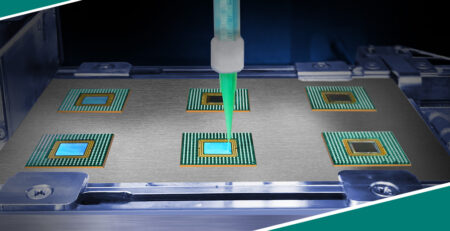
- Electronics and Circuit Board Potting: Specialized intumescent epoxy resins can be used to pot or coat sensitive electronic components. If a component overheats and risks catching fire, the potting compound expands to smother the nascent fire, disconnect electrical pathways, and prevent a small fault from becoming a full-blown board fire.
Advantages and Limitations
Advantages:
- Automatic and Passive: Requires no power, sensors, or human intervention.
- Space-Saving and Integrated: Becomes part of the assembly, unlike bulky external systems.
- Targeted Protection: Acts precisely where it is needed, at the critical juncture or weak point.
- Dual-Function: Serves as both a structural or sealing adhesive and a fire protection system.
Limitations:
- One-Time Use: The chemical transformation is irreversible. After a fire, the material must be replaced.
- Activation Temperature: It is only effective once a specific temperature threshold is reached, meaning it may not respond to smoldering, low-temperature fires initially.
- Formulation Specificity: The formulation must be meticulously engineered for its specific application, substrate, and required fire-resistance duration.
Conclusion
The development of automatic fire extinguishing glues marks a significant evolution in fire safety philosophy. We are moving from adding protective systems to building with inherently protective materials. This technology embodies a shift from reactive to proactive, from external to integrated.
By understanding the chemistry of intumescence and ablation, we can appreciate how a seemingly inert bead of glue or a layer of epoxy can become an active, life-saving firefighter when the situation demands it. It is a testament to material science that a substance can be both a robust, reliable adhesive and a sophisticated, heat-activated thermal shield. As we continue to push the boundaries of construction, transportation, and energy storage, these intelligent, multi-tasking materials will undoubtedly play an increasingly vital role in making our world more resilient and safe, one bonded joint at a time.
For more about how does an automatic fire extinguishing glue work: the adhesive that fights fire, you can pay a visit to Deepmaterial at https://www.adhesivesmanufacturer.com/ for more info.